
Starting a Minnesota Phone Number Search
Minnesota splits its phone information along the same lines it splits its government. State agencies list employees in one place. Counties handle sheriffs, jails, public health, social services, property records, elections, and child support, and each one publishes separately. Cities own permits, inspections, streets, and local police. School districts run their own directories. None of these systems talk to each other, and none of them will hold a number that belongs to a different level.
When an online directory comes up empty, the fallbacks in Minnesota are consistent. Call the main switchboard for the office and ask to be routed. Walk into a service counter if one exists, since city halls, license centers, and county service centers keep staff at a desk. Ask the city clerk or the county data practices office for something that was never published, using a public data request if it comes to that. In Minneapolis, 311 covers most of this at once. Elsewhere the switchboard plays that role.
Smaller cities often publish more detail than large ones. The South St. Paul staff directory is a good example of what a mid-size Minnesota city puts online.
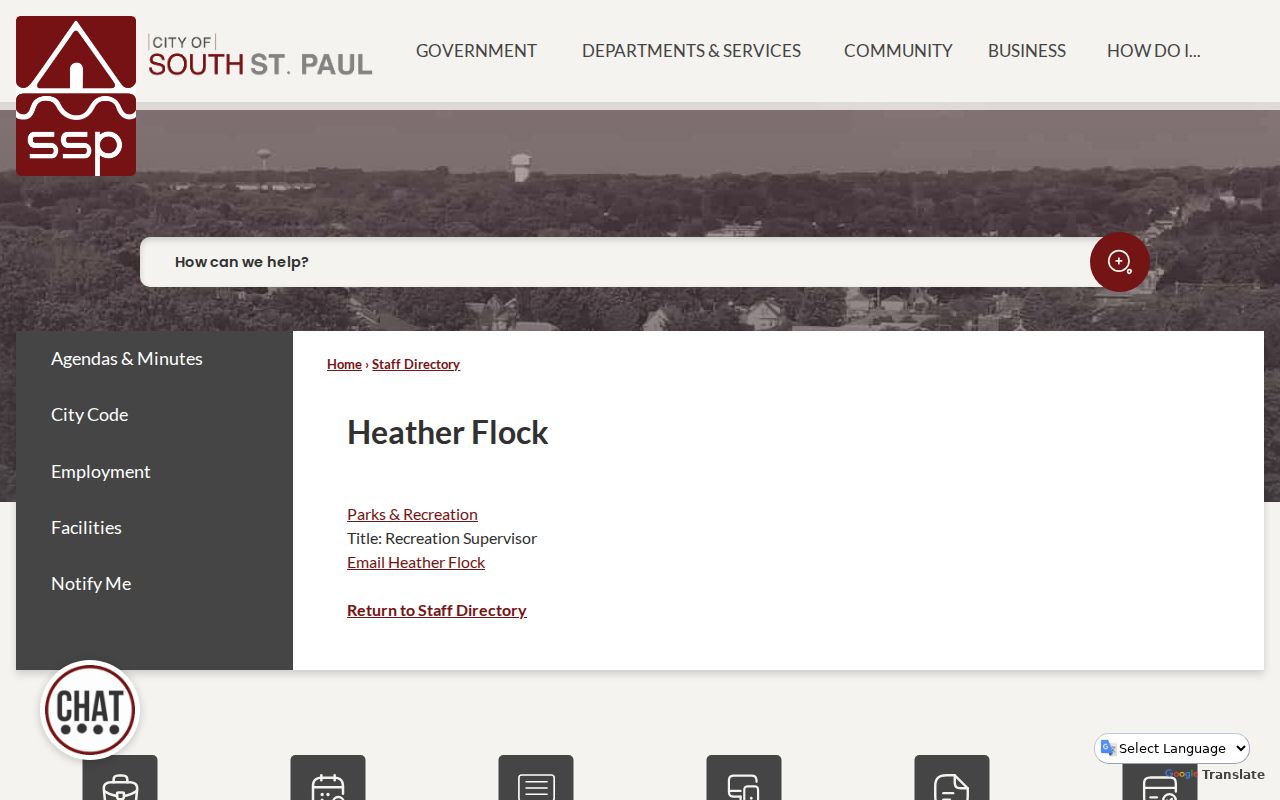
Directories built this way search by first name, by last name, or by department category, and the category list alone often gets you a direct number.
The Minnesota State White Pages
The Minnesota State White Pages is the one directory that covers employees across the whole state government. It takes a name, an agency, or both, and the agency dropdown loads every department. The page recommends searching a legal name rather than a nickname, since the records come from payroll. If a search returns more than 100 people, it asks you to add detail. Anything wrong in a listing goes to that agency's human resources staff, not to whoever runs the directory.
| Field | Type | Required | Notes |
|---|---|---|---|
| Name | Text | No | Legal name works best, so Robert rather than Bob |
| Agency | Dropdown | No | Defaults to all agencies, with the full list loaded on the page |
| Display Options | Radio | No | Brief output or full output |
| Search | Button | Not applicable | Runs the query and returns a result table |
What comes back depends on the display option you picked. Brief output is a short table. Full output reads more like a personnel card, and a complete Minnesota state record shows the following.
- Name and title as payroll records them, with the title in full output only
- Agency the person works for
- Telephone, or Not Available when no number is published
- Email at the work address
- Fax, or Not Available
- Mailing address across two address lines, a mailstop, city, state, and ZIP
Personal cell and home numbers never appear. Neither do city or county employees, since this directory only reaches state payroll. For those, a Minnesota county or city site is the source.
Minnesota Emergency, Crisis, and Police Numbers
Public safety numbers in Minnesota fall into four groups, and mixing them up wastes time when time matters. Emergencies go to 911. Mental health crises go to 988. Community needs go to 211. Anything that already happened goes to a local non-emergency line. Hennepin County's own guidance puts it plainly: when in doubt, call 911.
911 - immediate danger, fire, medical emergency, or a crime in progress.
988 - Suicide and Crisis Lifeline, by call or text, free and confidential around the clock. The older line, 1-800-273-8255, still answers.
211 - United Way 211 Minnesota, also reachable at 800-543-7709 or by texting a ZIP code to 898-211.
511 - MnDOT road conditions statewide, or 800-542-0220 from out of state.
Poison Control - 1-800-222-1222, day or night.
Police non-emergency numbers are strictly local here. Saint Paul takes reports about older incidents at 651-291-1111. Minneapolis routes much of that through 311 or an online report, and the Hennepin County Attorney police contacts page publishes the precinct desks directly.
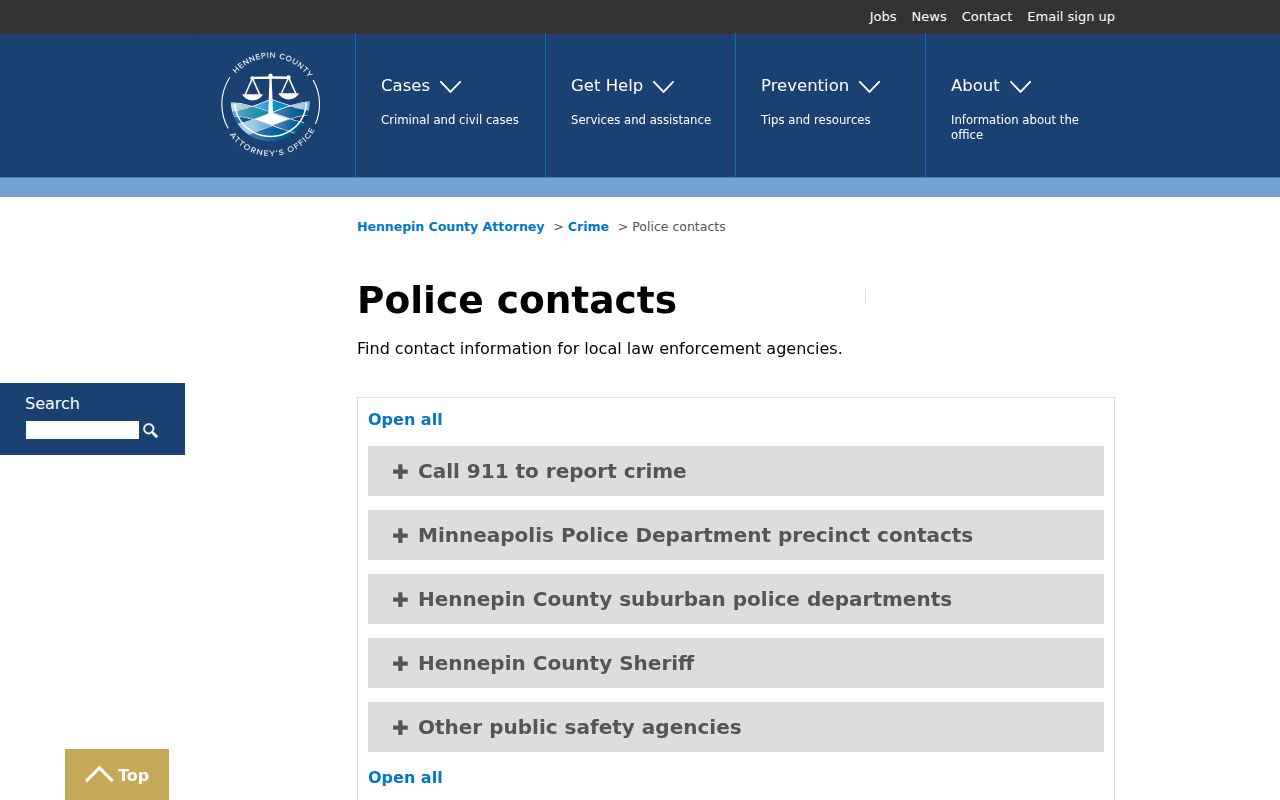
That list gives the First Precinct downtown at 612-673-5701, the Second Precinct on the northeast and southeast sides at 612-673-5702, and the Third Precinct in south Minneapolis at 612-673-5703.
- Day One Crisis Hotline - 1-866-223-1111 for domestic and sexual violence help across Minnesota
- National Domestic Violence Hotline - 1-800-799-7233
- RAINN Sexual Assault Hotline - 1-800-656-4673
- Hennepin County child protection - 612-348-3552, with adult protection at 844-880-1574
- Metro Transit Text for Safety - 612-900-0411 for behavior on buses, trains, and platforms
- Anoka County scam verification - 763-427-1212 to reach a deputy about a suspicious law enforcement call
Crime victim programs run through the state as well, with published lines including 651-201-7300, 888-622-8799, 651-201-7310, and 800-247-0390 depending on the program.
Minnesota School and College Phone Numbers
School phone numbers sit at three separate levels in Minnesota, and only one of them is statewide. The Department of Education handles policy, funding, and statewide programs. Districts handle every school, every principal, and every teacher. Colleges run directories of their own, with varying amounts of it open to the public.
The Minnesota Department of Education answers at 651-582-8200, and it staffs a separate language assistance line at 651-785-4064.
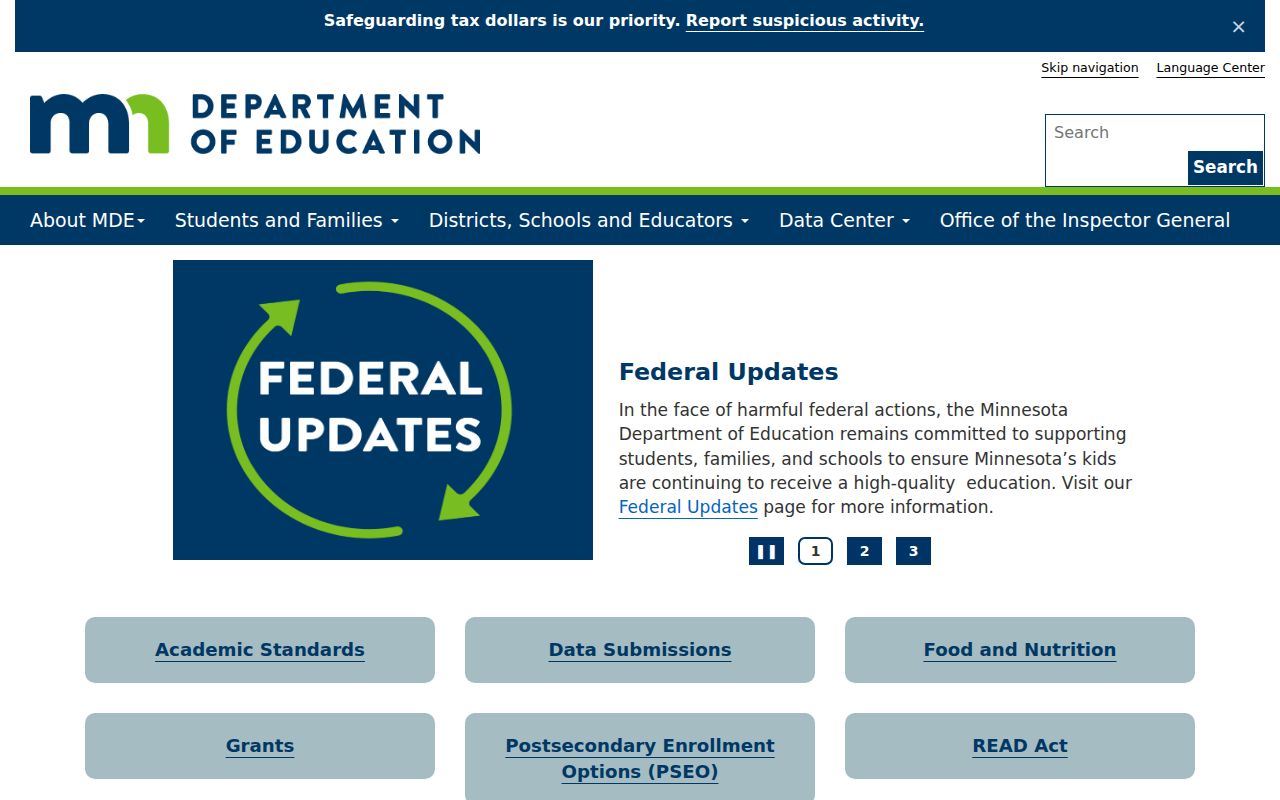
That language line comes with resource pages in Amharic, Hmong, Karen, Oromo, Somali, Spanish, and Ukrainian, which is unusual detail for a state education agency.
University of Minnesota
People Search runs inside the campus network only
College and department directories are public
Campus numbers often start 612-624
Minnesota Office of Higher Education
1450 Energy Park Drive, Suite 350
St. Paul, MN 55108
651-642-0567 or 800-657-3866
Saint Paul Public Schools runs the largest openly searchable K-12 staff directory in the state. It held 12,150 records when last checked, listed ten at a time, with keyword, first name, and last name fields doing the filtering. Entries show a name, an email, a title such as Nutrition Services Assistant, a school location such as Highland Park Senior High, and a department. Direct phone numbers do not appear on every record, so the district line is the reliable fallback.
Higher education works the other way around. The University of Minnesota keeps its central People Search behind the campus network as a privacy measure, so the public route is a college directory instead. Those pages list name, title, department, program, email, and often a 612-624 campus number. Library numbers stay local, with Saint Paul Public Library at 651-266-7000 and Rochester Public Library at 507-328-2300.
Utility, Transit, and Road Numbers in Minnesota
The single most useful rule for Minnesota utility calls is that emergency lines and billing lines are never the same number. A gas odor or a downed wire needs the crew. A disputed bill needs a clerk. Minnesota adds a statewide number for a third situation, which is anyone about to put a shovel in the ground.
| Service | Emergency or Outage | Customer Service |
|---|---|---|
| Gopher State One Call | 1-866-640-3637 for emergency locates, answered 24 hours | 811, 651-454-0002, or 800-252-1166 |
| Metro Transit | 911 for crimes, 612-900-0411 to text a safety report | 612-373-3333 |
| Road conditions | 511 statewide | 800-542-0220 from outside Minnesota |
| Electric service | Provider outage line, listed on your bill | Provider billing line |
| Natural gas | Leave the area first, then call the provider leak line | Provider customer service |
| Water, sewer, and trash | City or municipal utility emergency line | City utility billing or public works |
| Unresolved utility complaint | Not an outage line | Minnesota PUC Consumer Affairs, 651-296-0406 |
The Gopher State One Call ticket page is where locate requests and ticket searches both start.
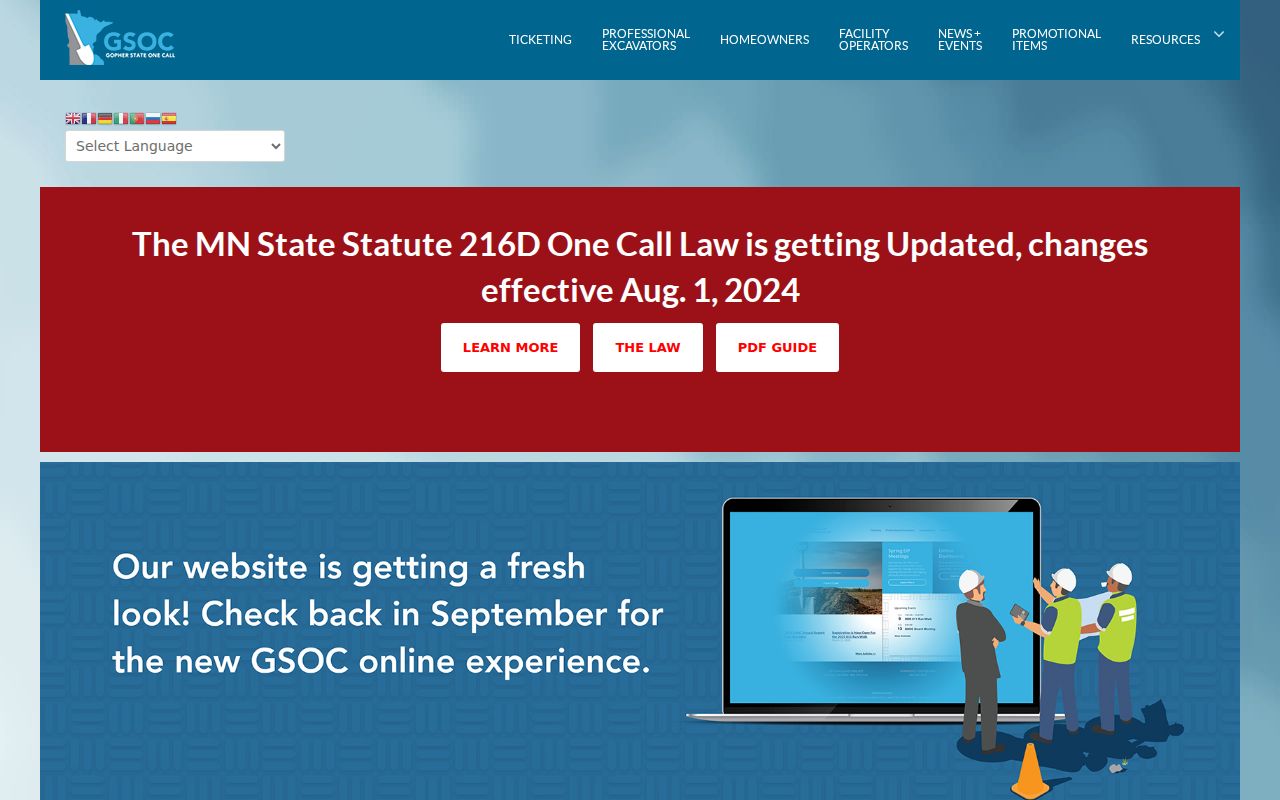
Call center hours shift with the season, running 6 a.m. to 6 p.m. on weekdays from April through October and 7 a.m. to 5 p.m. from November through March, while the emergency locate line stays open all the time.
Transit is its own category in the metro. The Metro Transit contact page puts customer service, lost and found, account questions, and safety reporting in one place.
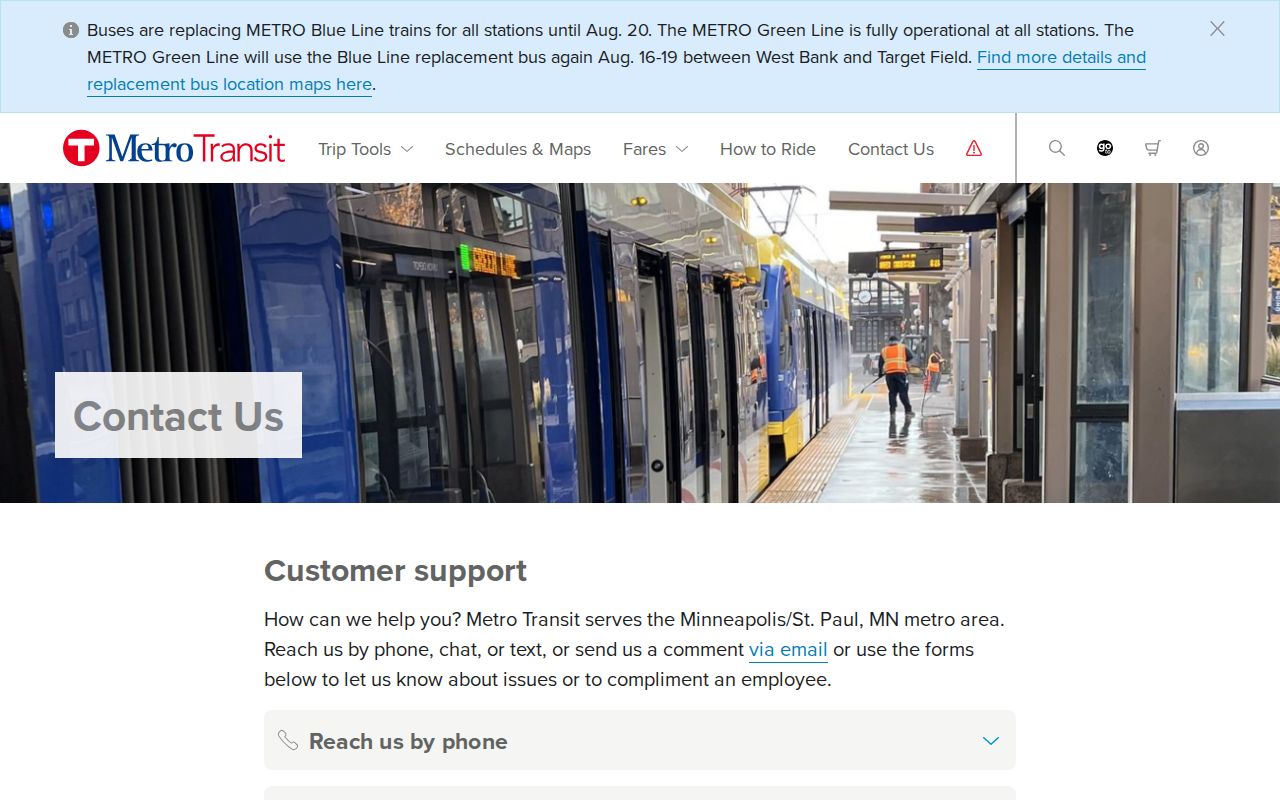
The 612-373-3333 line is not only for complaints. Staff there will plan a trip with you if you tell them where you are starting and where you need to go.
Utility territory in Minnesota changes by address, so the outage number printed on a current bill beats anything found by searching. When a company will not resolve a problem, the Public Utilities Commission takes complaints online, by email to consumer.puc@state.mn.us, by fax at 651-297-7073, or by mail to 121 7th Place East, Suite 350, St. Paul, MN 55101. Its assistance line is 651-296-0406.
Minnesota Health and Human Services Phone Numbers
The Minnesota Department of Health publishes one of the most detailed phone lists any state agency puts online. General information is 651-201-5000 or 888-345-0823. District offices cover the regions: Bemidji at 218-308-2100, Duluth at 218-302-6166, Fergus Falls at 218-332-5150, Mankato at 507-344-2700, Marshall at 507-476-4220, Rochester at 507-206-2700, and St. Cloud at 320-223-7300.
The frequently called MDH numbers page sorts the program lines by subject rather than by division.
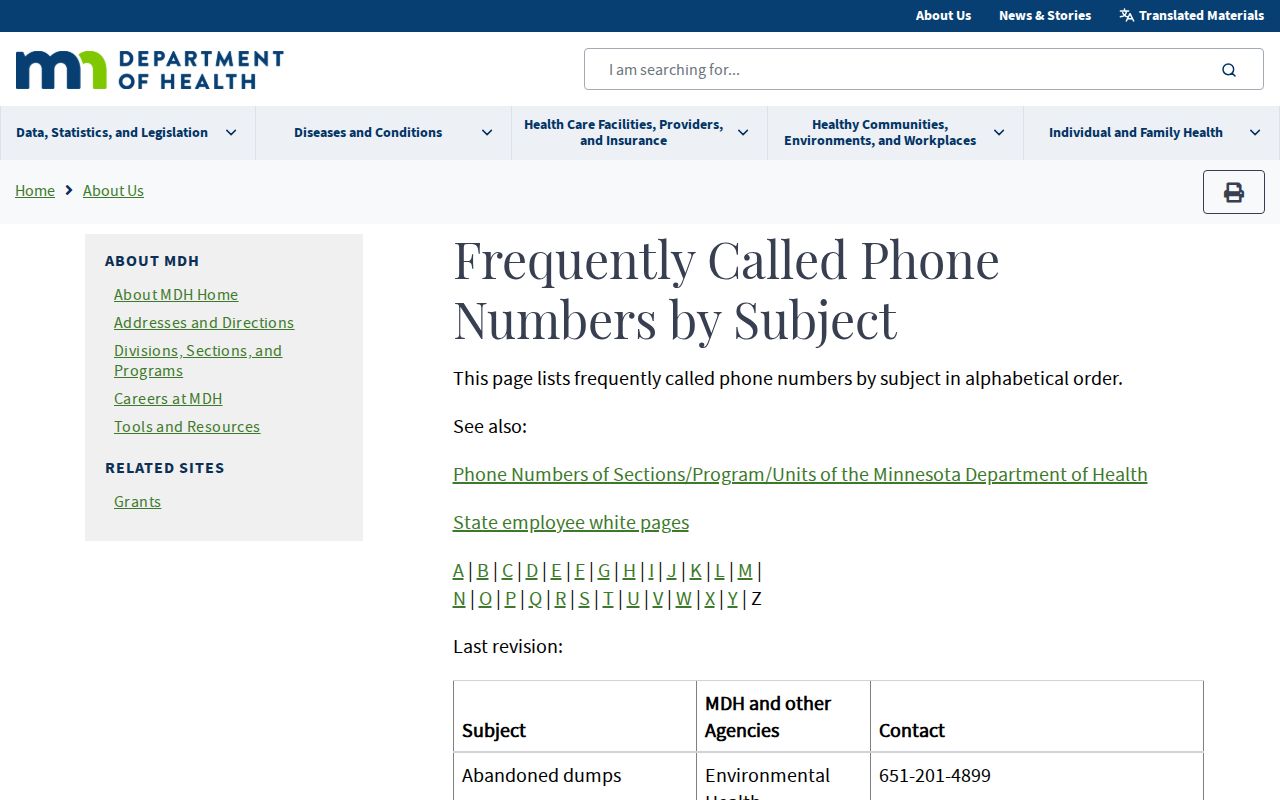
Useful entries there include drinking water protection at 651-201-4700, emergency preparedness at 651-201-5700, food, pools, and lodging services at 651-201-4500, home care and assisted living at 651-201-4200, children and youth with special health needs at 651-201-3650 or 1-800-728-5420, and the foodborne illness hotline at 1-877-366-3455, which spells FOOD-ILL.
Human services runs on a separate set of numbers. The information desk is 651-431-2000 with TTY at 800-627-3529. Health care providers use 651-431-2700 or 800-366-5411. Members use 651-297-3862 or 800-657-3672. The agency asks people not to send private data by email, which matters before typing a case number into a web form.
Actual crisis response is a county service. Hennepin County shows the pattern, with adult mental health emergencies at 612-596-1223 through Cope, family and youth response at 612-979-9511, the adult behavioral health center at 612-879-3115, emergency short-term help at 612-596-1900, and the shelter hotline at 612-204-8200. Those are Hennepin numbers, not statewide ones. For substance use treatment referrals anywhere in the state, SAMHSA answers at 1-800-662-4357.
Minnesota Vital Records and Licensing Numbers
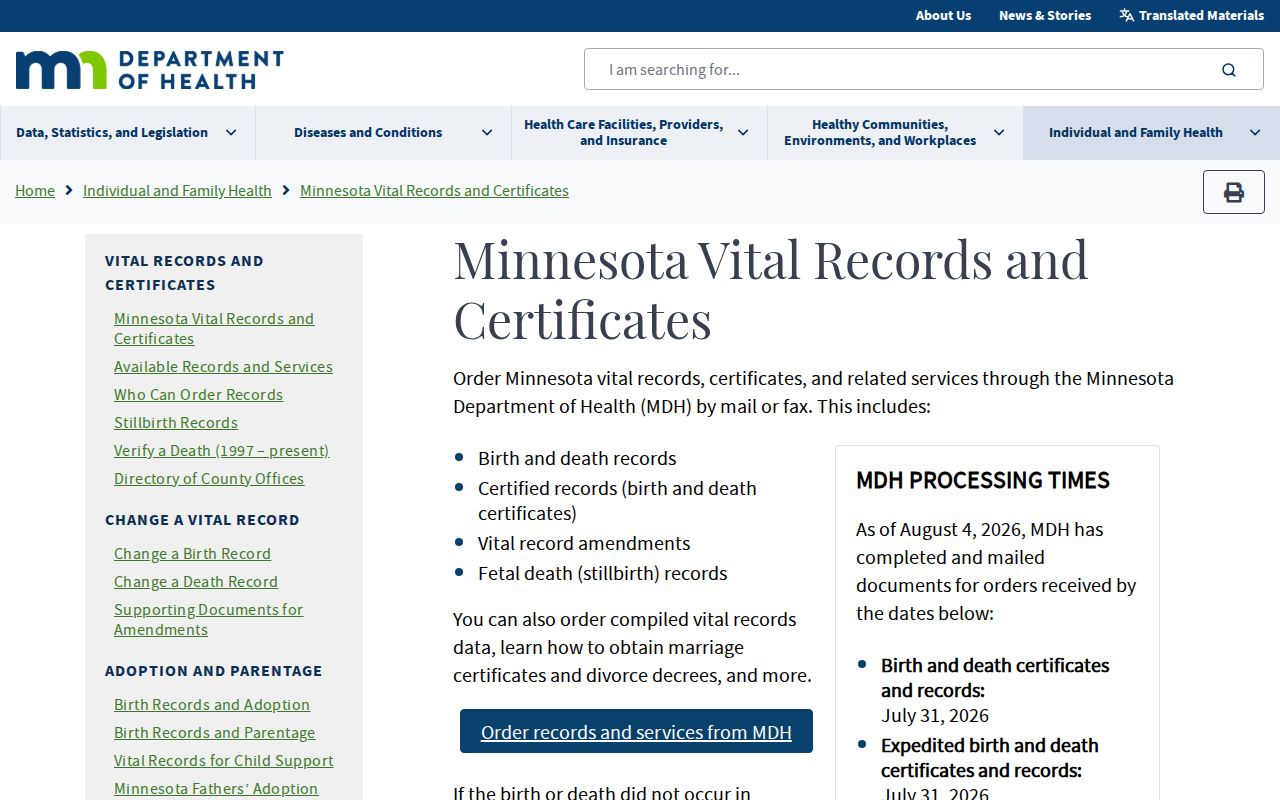
Birth and death records in Minnesota run through the state health department and through county offices, and either one can issue a certified copy. The state Office of Vital Records answers at 651-201-5970, and questions also go to health.vitalrecords@state.mn.us. Death records are on file from January 1908 forward. Certified certificates print on security paper and count as legal documents, while noncertified copies are informational only.
The Minnesota vital records page explains the difference before you order the wrong one.
County offices add their own detail. Wright County, for instance, notes that birth certificates from 1935 forward and death certificates from 1997 forward come through the state system electronically, so residents do not have to travel to the county where the event happened.
Other record types scatter across levels. Marriage licenses, real estate recording, and property assessment are county work. Voter registration questions go to the county auditor or elections office, since elections are run locally even though the Secretary of State sets statewide policy. Business filings, notary services, and UCC work go to the Secretary of State. Food, restaurant, amusement, taxi, tow truck, and vehicle service licenses are city functions, which is exactly why Minneapolis routes so much of that traffic through 311 instead of separate license desks.
County Phone Numbers in Minnesota
Counties answer more resident calls in Minnesota than most people expect. Sheriffs, jails, public health, human services, property and tax records, the recorder, elections, child support, and veterans services all sit at that level. There is no shortcut number that reaches all of them, and the state directory will not return county employees.
Hennepin County publishes a general information line at 612-348-3000, open weekdays from 8 a.m. to 4:30 p.m., and then sends most traffic to service pages instead of a flat employee list. Ramsey County goes the other way with a real staff search at its phone directory, where the first few letters of a first name, a last name, or a department are enough to run a query. Corrections to that directory go through the county IS Service Desk.
On the state side, the offices people call most are the Attorney General at 651-296-3353 in the Twin Cities calling area or 800-657-3787 outside it, MnDOT at 651-296-3000 or 800-657-3774, and the Public Utilities Commission at 651-296-0406. Minnesota Relay serves all of them at 800-627-3529. Tribal governments run separate offices again, with contact information linked from the state portal.
Minnesota Court and Legal Help Numbers
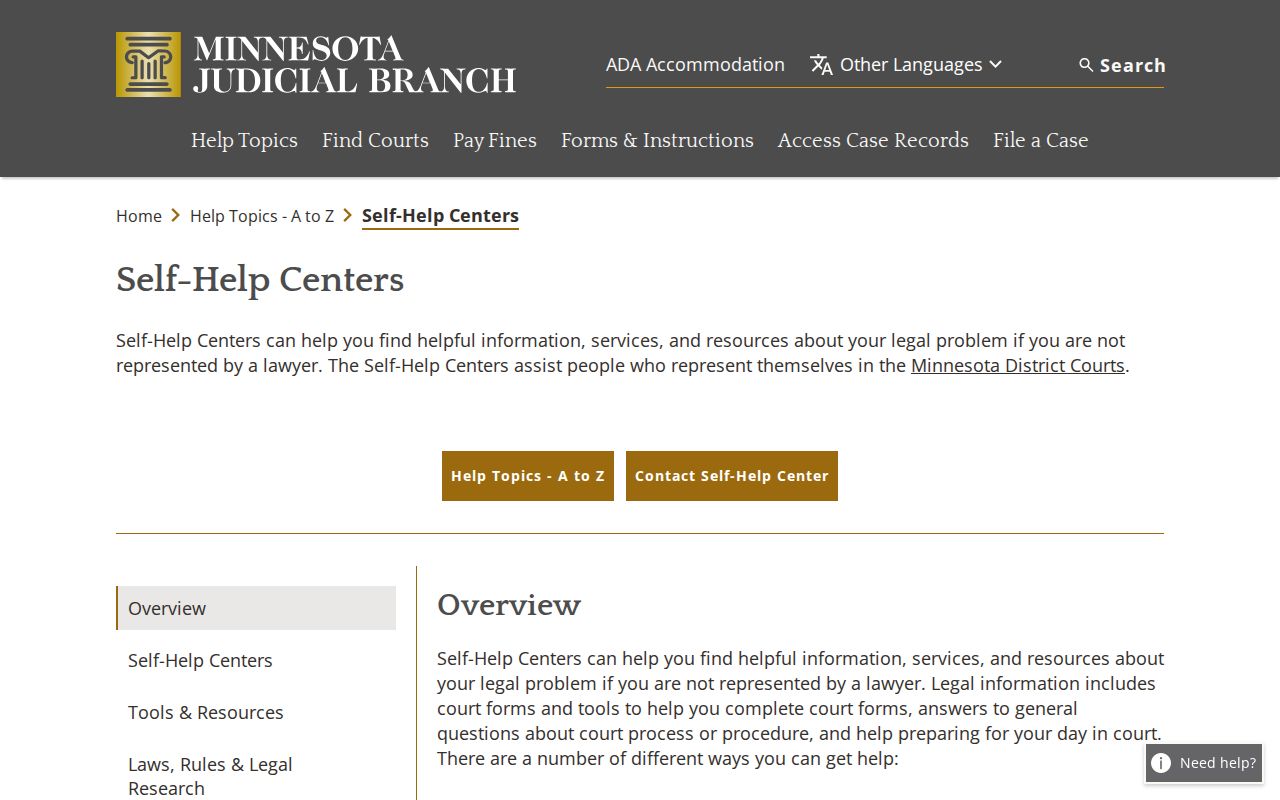
Court questions in Minnesota have a single statewide starting point. The Minnesota Judicial Branch Self-Help Center answers at 651-435-6535 on weekdays from 9 a.m. to 4 p.m., closed on holidays. Staff there explain forms and procedures without giving legal advice. Emailed questions can take four or five business days, so the phone is faster when a deadline is close.
The statewide Self-Help Center page covers what the office can and cannot answer.
Which public defender office serves a case depends on the judicial district and county, so the Board of Public Defense directory or the court administrator is the right place to ask.
- Board of Public Defense main office - 612-349-2565, with the State Public Defender at 612-200-8755
- Mid-Minnesota Legal Aid intake - 1-877-696-6529, with the Minneapolis office at 612-334-5970
- Minnesota Disability Law Center - 1-800-292-4150
- Minnesota Lawyer Referral and Information Service - 612-752-6699
- Minnesota State Bar Association - 612-333-1183, with fee arbitration information at 800-882-6722
Legal Aid keeps limited hours, answering Monday through Thursday from 8:30 a.m. to 4:30 p.m. and Friday morning until noon. Local public defender offices publish their own numbers as well, including the First District management office in Hastings at 651-480-0122, Anoka County at 763-422-3350, and Washington County at 651-351-3700.
Checking a Minnesota Caller Through Official Channels
Official sources will not hand you a name. What they do is tell you whether a number has been reported, whether an area code is genuine, and where to file when something is wrong. That is often enough to decide whether to call back. Federal tools handle the complaint side, and Minnesota agencies handle anything involving a business or a utility in the state.
The FCC Consumer Complaints Center takes phone complaints covering unwanted calls, spoofing, billing, equipment, coverage, and number porting.
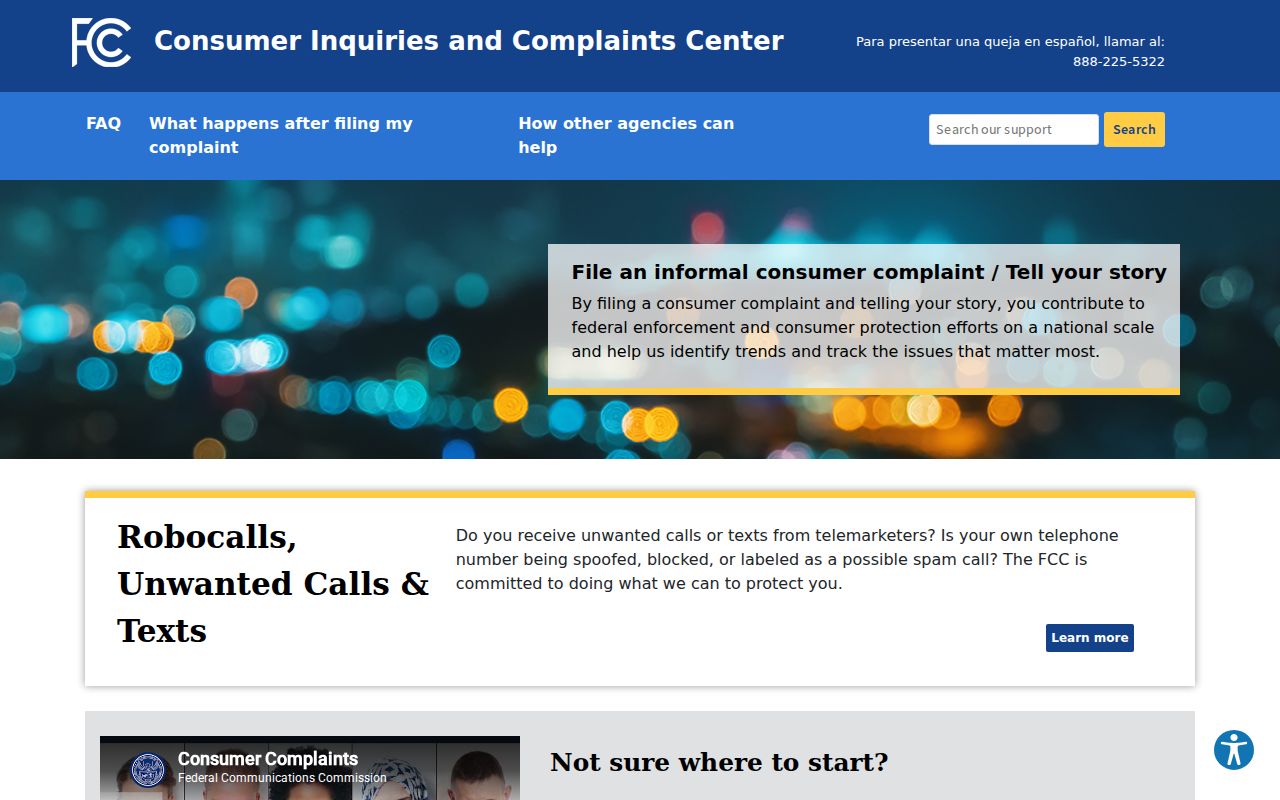
Its support line is 888-225-5322, and the site sorts complaints by issue type before asking for any details.
- Write down the number that called, the number it reached, any callback number, the exact date and time, and whatever the message said.
- Check the area code against NANPA records to see whether it exists and where it was assigned. A code that does not match the caller's story is a warning sign.
- Look at the Minnesota Attorney General consumer publications and scam alerts to see whether the same pitch has already been reported in the state.
- File with the FTC at donotcall.gov if the call was telemarketing, or with the FCC if the problem is spoofing or a caller ID label.
- Report to the Minnesota Attorney General at 651-296-3353 or 800-657-3787 if money changed hands or the caller impersonated a business.
One federal database gets misread often. The FCC Reassigned Numbers Database is built so businesses can avoid calling a number that changed hands, not so consumers can look up an owner. It is subscription based and it returns reassignment status rather than a name. Utility and telephone service disputes go to the Minnesota PUC at 651-296-0406 after you have already tried the company.
Third-Party Tools for a Minnesota Number
The tools below are commercial products, not government services, and none of them speaks for any Minnesota agency. None of them is authoritative, and results vary a lot from one number to the next. They are worth a try when official channels have told you everything they can and you still want a guess at who is calling. Read what each one charges for before entering a number.
Truecaller is one of the widely used crowdsourced options.
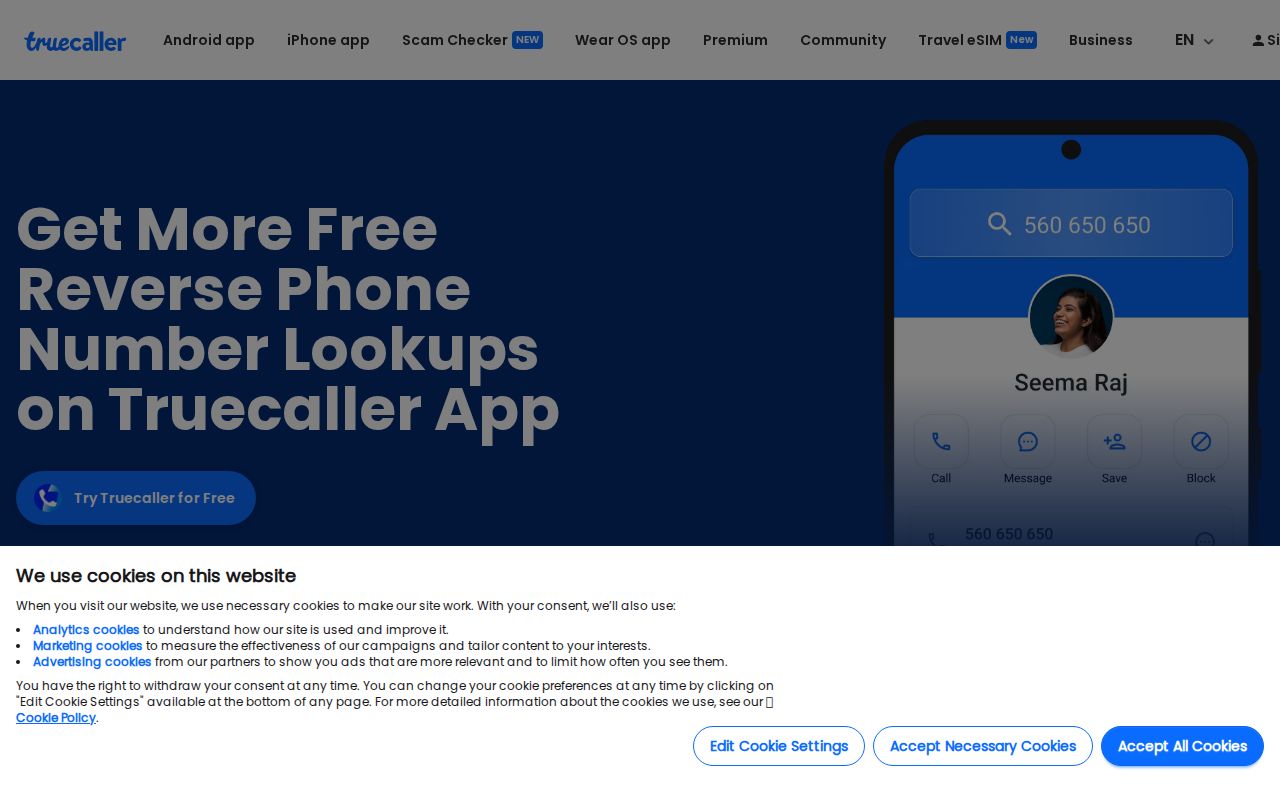
Crowdsourced labels are only as good as the reports behind them, so a brand new scam number often looks clean.
| Tool | Free? | Returns Name | Returns Carrier | Returns Line Type |
|---|---|---|---|---|
| Whitepages | Freemium | Often, paid for detail | Sometimes | Sometimes |
| NumLookup | Free or freemium | Often | Sometimes | Sometimes |
| Truecaller | Freemium | Crowdsourced | Limited | Spam category |
| RoboKiller | Freemium or paid | Spam identity | Limited | Spam category |
| YouMail Directory | Free to browse | Spam and business labels | No | Spam category |
| Carrier apps | Included with the line | Spam label | Your own carrier | Spam category |
Carrier tools are the ones most Minnesota residents already have and never turn on. AT&T ActiveArmor, Verizon Call Filter, and T-Mobile Scam Shield all warn, label, or block based on network data. None of them identifies every caller, and all of them occasionally flag a real business.
Landline, Wireless, and VoIP Minnesota Numbers
Line type explains a lot about how a Minnesota number behaves. A landline usually sits at a fixed address and may not accept a text. A wireless number travels and takes SMS. An internet line can belong to a legitimate business phone system or to a scam operation that rotates numbers weekly. An area code and prefix will not tell you which is which.
| Line Type | What It Usually Means | Common in Minnesota |
|---|---|---|
| Landline | Fixed service address, often no text messaging | Lumen and CenturyLink territory, plus telephone cooperatives and independent carriers in greater Minnesota |
| Wireless | Moves with the person, accepts calls and texts | AT&T, Verizon, T-Mobile, UScellular in parts of the state, plus resellers such as Cricket, Metro, Mint, Visible, Boost, Consumer Cellular, and Google Fi |
| VoIP | Runs over an internet connection and is easy to move or replace | Comcast, Spectrum, Mediacom, and business phone providers, along with the cheap services scam callers favor |
Number portability is why Minnesota lookups go stale. A line can start as a landline in a Twin Cities rate center and end up on a wireless carrier without a single digit changing. Prefix records show what was originally assigned, and sometimes a current carrier, but they can lag reality by a long way. Treat any carrier result as a lead. Before calling back a number that claims to be a government office or a utility, look up that office and dial the number it publishes.
Where to Report a Minnesota Scam Call
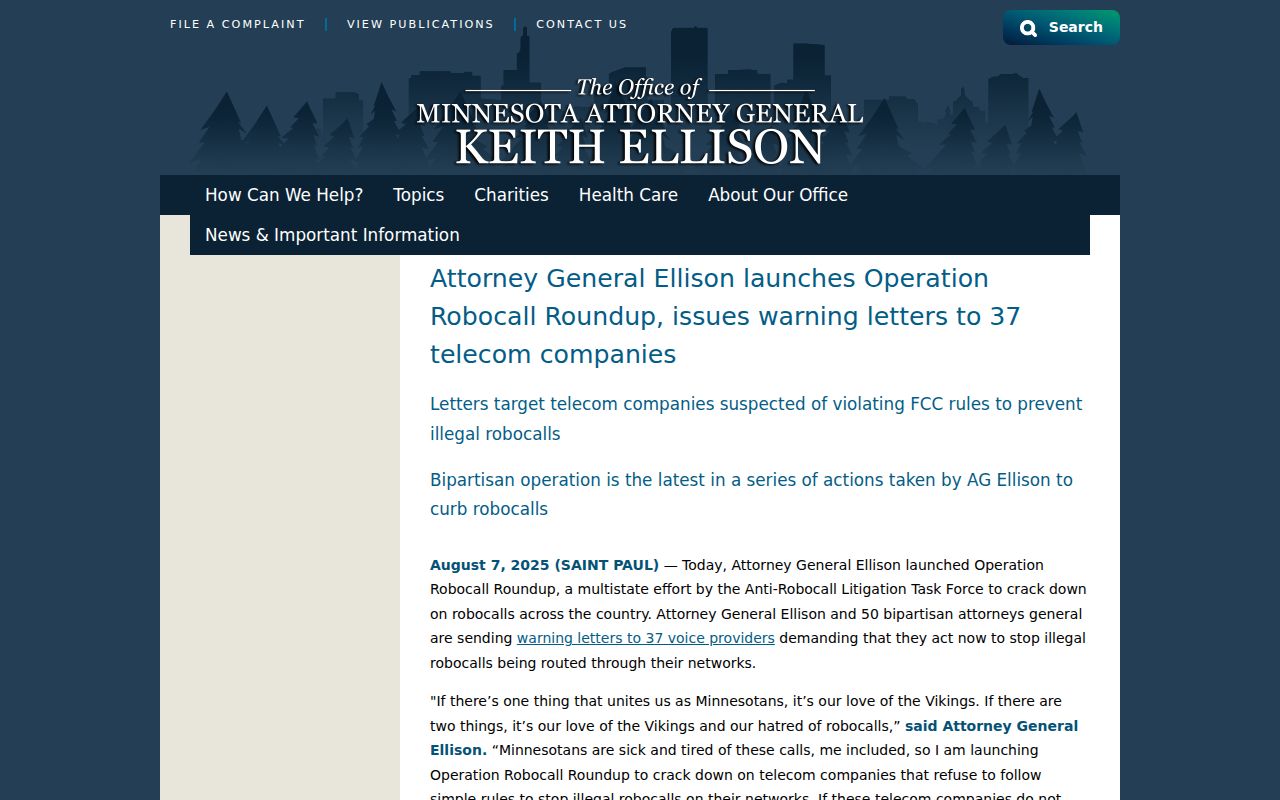
Minnesota has been pushing back on robocalls publicly. In August 2025 the Attorney General joined 50 attorneys general in Operation Robocall Roundup and sent warning letters to 37 voice providers suspected of ignoring FCC rules meant to keep illegal robocalls off the network.
The Attorney General release on Operation Robocall Roundup lays out what the multistate task force was targeting.
The same office publishes a plain-language guide explaining why registering on the Do Not Call list does not stop calls from people already breaking the law.
The scripts in circulation around Minnesota are familiar. Someone claiming to be law enforcement demands gift cards or cryptocurrency over a warrant. A caller spoofs a utility and threatens a shutoff within the hour. In September 2025, Minnesota Management and Budget warned that callers posing as the State of Minnesota were asking vendors to change banking details, and confirmed that state agencies do not make requests like that out of the blue. Medicare pitches, jury duty warrants, grandparent emergencies, and text-based toll and ticket scams round out the list.
Reports go to different offices depending on the problem. Telemarketing goes to the FTC Do Not Call Registry, with consumer response at 1-877-382-4357. Spoofing and caller ID trouble goes to the FCC at 888-225-5322. Money lost, or a caller impersonating a real business, goes to the Minnesota Attorney General complaint form or by phone at 651-296-3353 and 800-657-3787. Phone company billing and service disputes go to the PUC at 651-296-0406.
Note: Save the voicemail and write down the exact time before filing, because complaints with specific details are far more useful than general ones.
Minnesota 211 and Language Access Lines
United Way 211 Minnesota is the best answer when the need is clear and the office is not. It runs around the clock, free and confidential, and the specialists who answer connect callers with health and human services across the state. Reaching it takes 211, or 800-543-7709, or a text with your ZIP code to 898-211. It is also the fastest way into county human services when you do not know which county handles your case.
Language access in Minnesota is stronger than most directories let on. The state portal carries Spanish, Hmong, and Somali navigation. The education department staffs 651-785-4064 with materials in seven languages. Minnesota Relay serves deaf, hard of hearing, and speech-disabled callers statewide at 711 or 800-627-3529, and agencies including the Attorney General and Human Services publish that line alongside their own.
Community directories fill the last gaps. County veterans service offices, tribal government offices, the Minnesota Council of Nonprofits, and chambers of commerce in Minneapolis, Saint Paul, Rochester, and Duluth all publish member and office numbers that no government list carries. Greater Twin Cities United Way works as a Minnesota partner on the 988 crisis line, which is a useful reminder that the nonprofit and government sides of this often share the same phone tree.