
How Minnesota Phone Codes Fit Together
Minnesota sits inside the North American Numbering Plan, so every full number here has ten digits. Three for the area code, three for the exchange prefix, and four for the line. What changes from call to call is which phone code goes in front. A local call in southern Minnesota needs all ten digits. A long distance call often needs a 1 ahead of them. An international call needs 011 and a country code first. A service call needs only three digits and nothing else.
The local rule depends on where you are. Southern Minnesota, meaning the 507 and 924 region, has required ten digits since July 30, 2024. In the other Minnesota area codes a seven-digit local call may still connect, and whether it does comes down to the carrier and the local calling boundary. Ten digits work statewide either way, which is why storing every contact in full is the simplest habit.
| Call Type | Phone Code Format | Example |
|---|---|---|
| Local in the 507 and 924 region | Area code plus seven digits, always | 507-206-2700 |
| Local elsewhere in Minnesota | Seven digits may work, ten always does | 651-201-5000 |
| Long distance inside the United States | 1 plus the ten-digit number | 1-218-302-6166 |
| Toll-free | 1 plus a toll-free code plus seven digits | 1-800-657-3787 |
| International from Minnesota | 011 plus country code plus number | 011 plus the rest |
| Service line | Three-digit N11 phone code | 511 |
N11 Phone Codes Across Minnesota
The N11 codes are the three-digit shortcuts. They work from any Minnesota phone without an area code, but what answers depends on where the call comes from. Some are federal. Some are run by the state. One of them, 311, only exists in certain cities, and assuming otherwise is the most common mistake people make with these codes.
| N11 Phone Code | What It Reaches in Minnesota |
|---|---|
| 211 | United Way 211 Minnesota for community services, also 800-543-7709 or a text of your ZIP code to 898-211 |
| 311 | City services where a city runs it. Minneapolis is the clearest example, also reachable at 612-673-3000 |
| 411 | Directory assistance from your own carrier, usually for a fee |
| 511 | MnDOT road conditions and traveler information, or 800-542-0220 from outside Minnesota |
| 611 | Repair and customer service at whichever company provides your line |
| 711 | Minnesota Relay for deaf, hard of hearing, and speech-disabled callers, also 800-627-3529 |
| 811 | Gopher State One Call before digging, also 651-454-0002 or 800-252-1166 |
| 911 | Police, fire, and medical emergencies |
| 988 | Suicide and Crisis Lifeline, running nationally since July 2022 |
Two of these have a distinctly Minnesota flavor. 511 gets heavy winter use because MnDOT feeds it plow locations, closures, crashes, and road surface reports through a voice system that works without a smartphone. And 811 points at Gopher State One Call, the state's single excavation notification system.
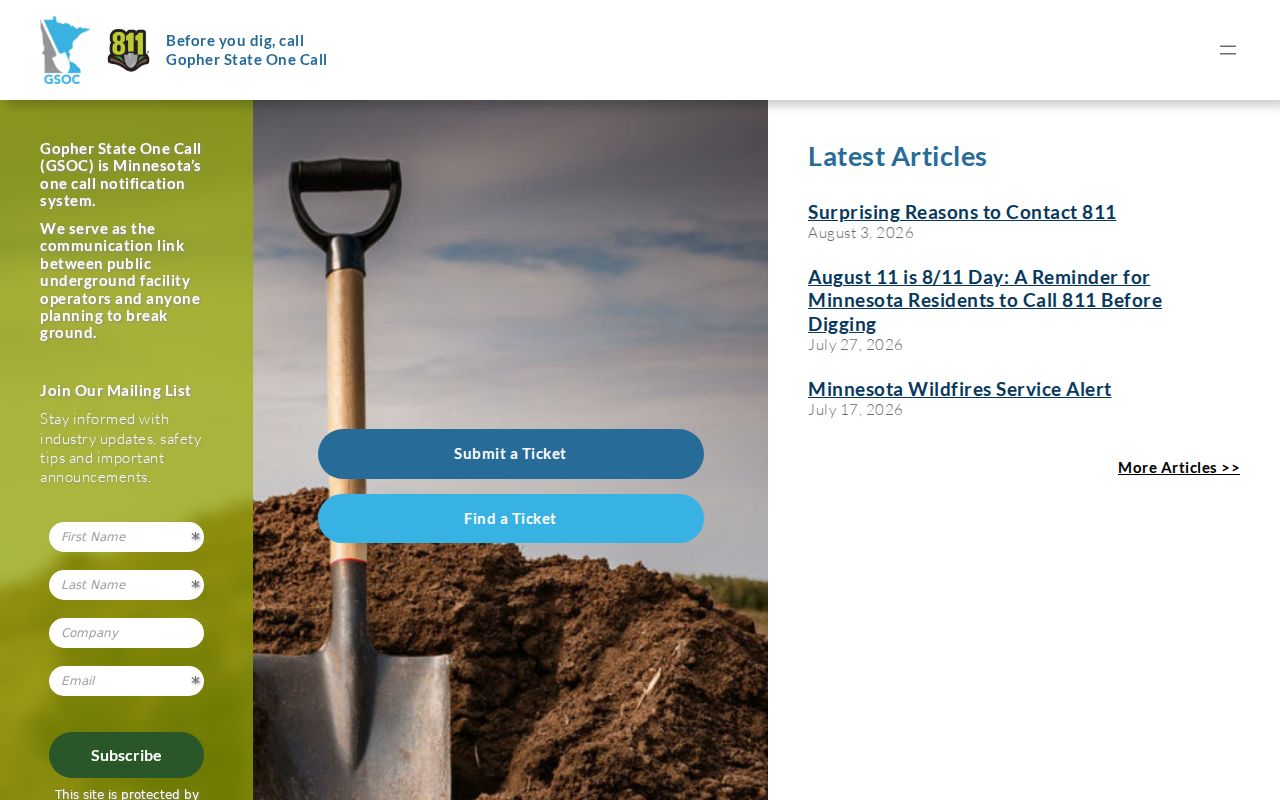
That one code stands between anyone with a shovel and a buried gas or fiber line, which is why the state pushes it as hard as it does.
The national program keeps an 811 Minnesota page as well, listing the same contact hours.
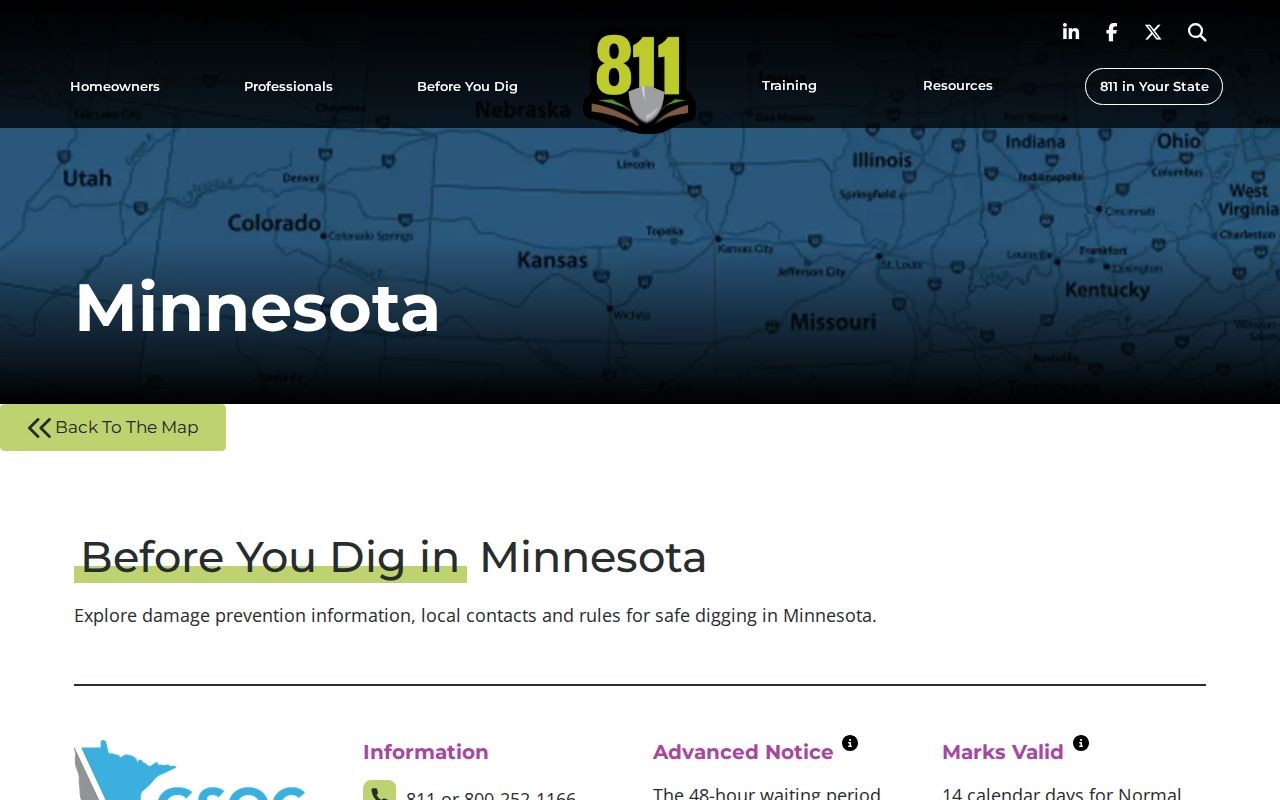
It is a useful cross-check when you are not certain the local center is the right one to call.
Note: 211 and 811 get confused more than any other pair, so remember that 211 finds services and 811 marks buried lines.
Star Phone Codes Minnesota Carriers Support
Star codes, known formally as vertical service codes, are the phone codes that change how a single call behaves rather than where it goes. You dial them before the number. Almost all of them came out of the landline era, which is why support is uneven now. Some work on a mobile phone, some do nothing, and some depend entirely on whether your line runs through a copper pair, a cable modem, or an office phone system.
| Star Phone Code | What It Does |
|---|---|
| *57 | Traces the last call, often used after a threatening one, with law enforcement or carrier follow-up |
| *60 | Blocks selected numbers from ringing through |
| *67 | Hides your caller ID for the next call only |
| *69 | Returns the last incoming call, sometimes for a fee |
| *70 | Turns off call waiting for the next call |
| *72 | Forwards all calls, followed by the number to forward to |
| *73 | Cancels call forwarding |
| *77 | Rejects calls that arrive with no caller ID |
| *82 | Reveals your caller ID for the next call only |
Do not count on any of these until you have tested them on your own line. A rural Minnesota cooperative, a metro cable provider, and a national wireless carrier can each support a different subset. Anonymous call rejection has a further limit worth knowing. It stops calls that arrive with no caller ID at all, and it does nothing about a spoofed number that shows a fake local one.
What 924 Changed for Southern Minnesota
The newest phone code in the state changed dialing habits rather than geography. 924 was laid over 507 rather than carved out of it, so southern Minnesota kept every number it had. What people had to change was the dialing itself, because two codes now share the same towns and seven digits are no longer specific enough.
The transition ran on three dates. Permissive ten-digit dialing opened January 30, 2024, letting both formats work while people adjusted. Mandatory ten-digit local dialing started July 30, 2024. Carriers could begin issuing 924 numbers on August 30, 2024. Equipment that dials without a person deserved attention during that window, including alarm panels, medical alert devices, fax machines, and speed dial lists on office phones.
For a caller in Rochester, Mankato, Winona, Austin, or Worthington, the practical effect is small but absolute. Every local call now carries the area code. A number that starts with 924 is as local as one that starts with 507. The geography behind both codes, and how the rest of the state's codes came to be, is covered on the Minnesota phone area codes page.
Minnesota Area Phone Codes at a Glance
Area codes are phone codes too, just the geographic kind. Eight of them serve Minnesota. Seven mark a region, and the eighth shares ground with a neighbor. In daily dialing they matter for one question, which is whether you have to include them on a local call.
- 612 covers Minneapolis and the closest inner suburbs, in service since 1947
- 218 covers northern Minnesota from Moorhead to Duluth, also since 1947
- 507 covers southern Minnesota, in service since 1954
- 320 covers central Minnesota, split off in 1996
- 651 covers Saint Paul and the east metro, split off in 1998
- 763 and 952 cover the north and southwest suburbs, both split off in 2000
- 924 overlays 507 across the same southern Minnesota towns, added in 2024
Recognizing a code is not the same as trusting it. Scam callers pick Minnesota codes on purpose so the phone looks like a neighbor calling, and a 612 or 507 number on the screen proves nothing about who is holding the phone.
Toll-Free Phone Codes and 900 Numbers
Toll-free phone codes look like area codes and carry no geography at all. The called party pays instead of the caller. Minnesota agencies lean on them heavily, which is why the Attorney General publishes 800-657-3787 for callers outside the Twin Cities, the health department publishes 888-345-0823, and human services publishes 800-657-3672. None of those digits says anything about where the office sits.
| Toll-Free Phone Code | Rolled Out |
|---|---|
| 800 | 1967, the original |
| 888 | 1996 |
| 877 | 1998 |
| 866 | 2000 |
| 855 | 2010 |
| 844 | 2013 |
| 833 | 2017 |
Each of those arrived because the one before it ran out of numbers. Toll-free numbers are also reserved and traded through a national administration system, so a number can move from one business to another over the years.
Premium codes work in the opposite direction. A 900 number bills the caller, and older 976 style services did the same thing locally. Many carriers and office phone systems block them outright. No legitimate Minnesota government office will ever ask you to dial one.
International Phone Codes From Minnesota
The country code for Minnesota is +1, shared with the rest of the United States, Canada, and the other participating countries in the numbering plan. You rarely dial it inside the country. It matters when someone abroad is calling you, or when a number needs to be stored in a form that survives roaming.
- From a Minnesota landline calling another country, dial 011, then the country code, then the local number.
- From a mobile phone in Minnesota, hold down the zero key to get a plus sign, then dial the country code and the number.
- From another country calling Minnesota, dial that country's exit code, then 1, then the ten-digit Minnesota number.
Storing contacts in the plus format is the habit that pays off later. A number saved as +1 612 673 3000 dials correctly from a kitchen in Duluth and from an airport on another continent, with no editing in between. Some prepaid and internet calling plans block international dialing by default, so check the plan before assuming the phone code is wrong.
Prefix Phone Codes Inside Minnesota Numbers
The three digits after the area code are the exchange phone code, written as NXX and sometimes called the central office code. In 612-673-3000, the Minneapolis city line, 673 is that middle block. It once pointed at a physical switch building, and it still points at a rate center, which is the billing area a line belongs to. Duluth, Rochester, Mankato, St. Cloud, and Willmar are all separate rate centers, and the metro holds many more spread across four codes.
Technical lookup sites show what sits behind a given prefix. The TelcoData detail view for a 612 exchange breaks a prefix into thousand-number blocks with company, rate center, switch identifier, assignment date, and prefix type.
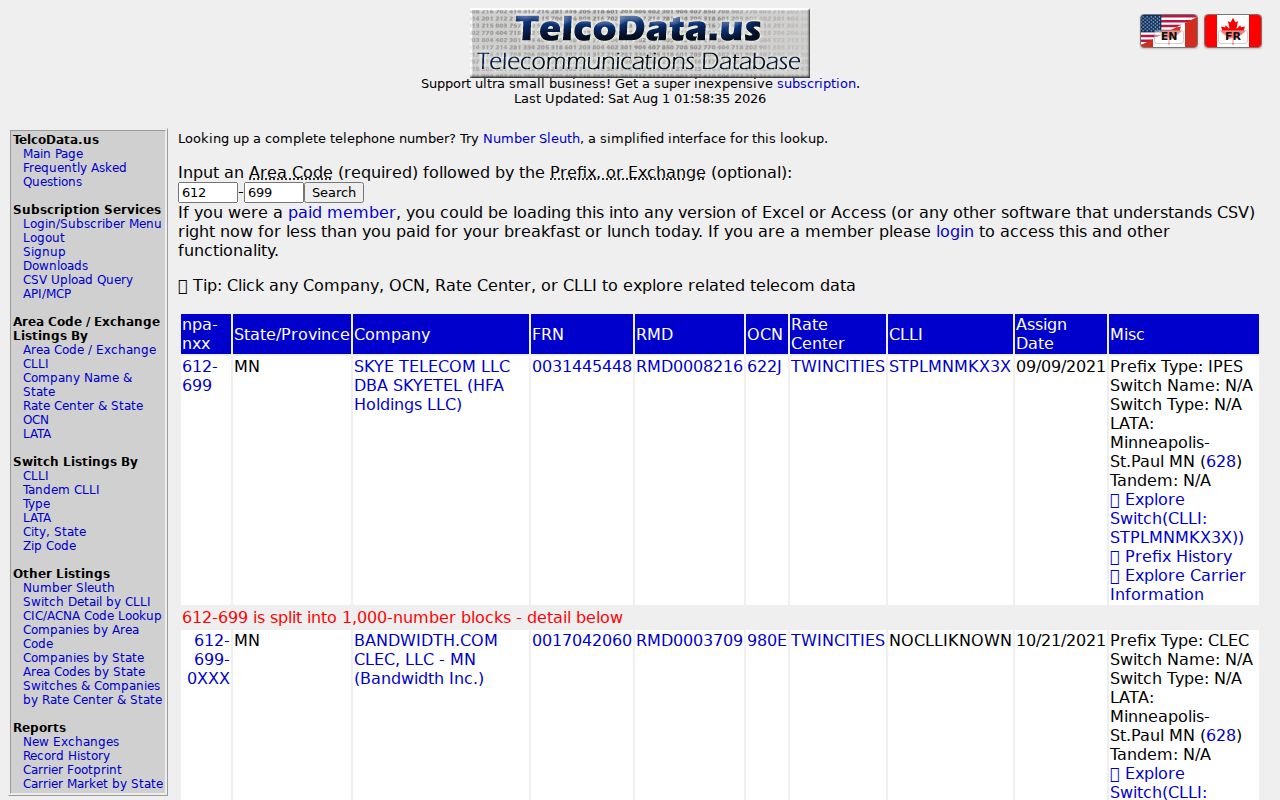
These are third-party technical summaries rather than official records, so treat them as a starting point.
Minnesota prefixes do leave recognizable fingerprints. State health numbers cluster in 651-201, human services in 651-431, Minneapolis city offices in 612-673, Hennepin County in 612-348, and Metro Transit in 612-373. Those patterns help you recognize a familiar office. They prove nothing about a caller, since number portability lets a line keep every digit while changing companies, and caller ID can be faked outright.
Spam Labels on Minnesota Caller ID
The Spam Risk tag on a Minnesota phone is not a phone code, but it rides along with the same call. It comes out of a mix of carrier analytics, complaint volume, calling patterns, and the caller ID authentication framework the FCC calls STIR/SHAKEN. That framework validates a call digitally as it passes between voice networks, so the receiving company can tell whether the caller ID was vouched for where the call started.
Authentication claims less than most people assume. It means the originating provider confirmed the caller had the right to use that number. It does not mean the caller is honest or that the displayed name is accurate. A legitimate Minnesota clinic can pick up a spam label from complaint volume alone, and a scam operation with properly registered numbers can arrive unlabeled. The Attorney General's own guidance makes the same point from a different angle, noting that spoofing over internet phone service hides both identity and location. Judge the call by what the caller asks you to do, not by the label above it.
Minnesota Phone Code Terms
A handful of terms cover almost every phone code question that comes up.
- NPA
- Numbering plan area, the three-digit area code at the front of a number.
- NXX
- Central office code, the three digits after the area code.
- N11
- The three-digit service codes: 211, 311, 411, 511, 611, 711, 811, 911, and 988.
- Vertical service code
- A star followed by two digits that switches a calling feature on or off.
- Toll-free prefix
- A code that bills the called party instead of the caller, covering 800, 888, 877, 866, 855, 844, and 833.
- Rate center
- The billing area a prefix belongs to, such as Duluth, Rochester, or Minneapolis.
- NANP
- The North American Numbering Plan, the +1 region that Minnesota shares with the rest of the country and its neighbors.
Where to Verify a Minnesota Phone Code
Two national bodies answer nearly every phone code question. NANPA administers the numbering plan and publishes the reference data behind area codes, exchange prefixes, service codes, and toll-free prefixes. The FCC handles the consumer side, including dialing rules and caller ID authentication. Anything specific to a Minnesota dialing change goes through the Public Utilities Commission, which is the body that approved the last one.
Verifying a phone code and verifying a caller are two different jobs. To put a name or a spam history against a specific number, the Minnesota phone numbers page covers the official channels and the commercial tools side by side.